

Bill of Materials validation, AI in the loop
Ford Innovation Lab, via IBM · 3 months
Context
IBM and Ford set up an innovation hub inside Ford, with a target of 3M in added value through cost recovery or new revenue. Discovery sessions, guest lectures and design thinking workshops with Ford executives produced 183 concepts, plotted on a grid of importance to the user against feasibility. They were cut to the three with the highest business value. I was brought in to apply design thinking to those three under tight deadlines, with a few days to understand each before going deep on the experience.
Problem
Building a prototype vehicle means validating its Bill of Materials, the full list of parts. Engineers and BOM operations teams reviewed it largely by hand, which wasted parts and time. A technical proof of concept, trained on 10,000 historical vehicles, showed an AI model could predict a new BOM far more completely than the current process. The question for design was how people would actually work alongside that prediction.
Approach
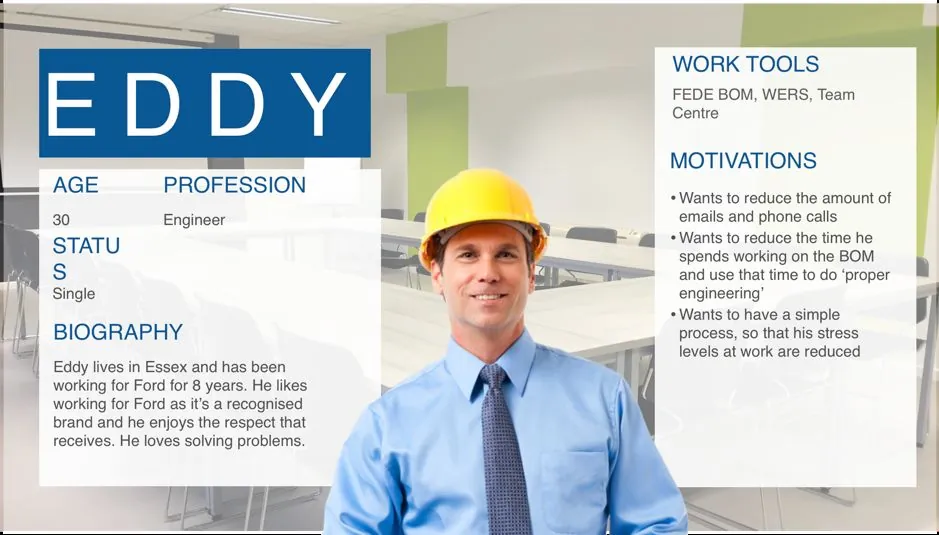
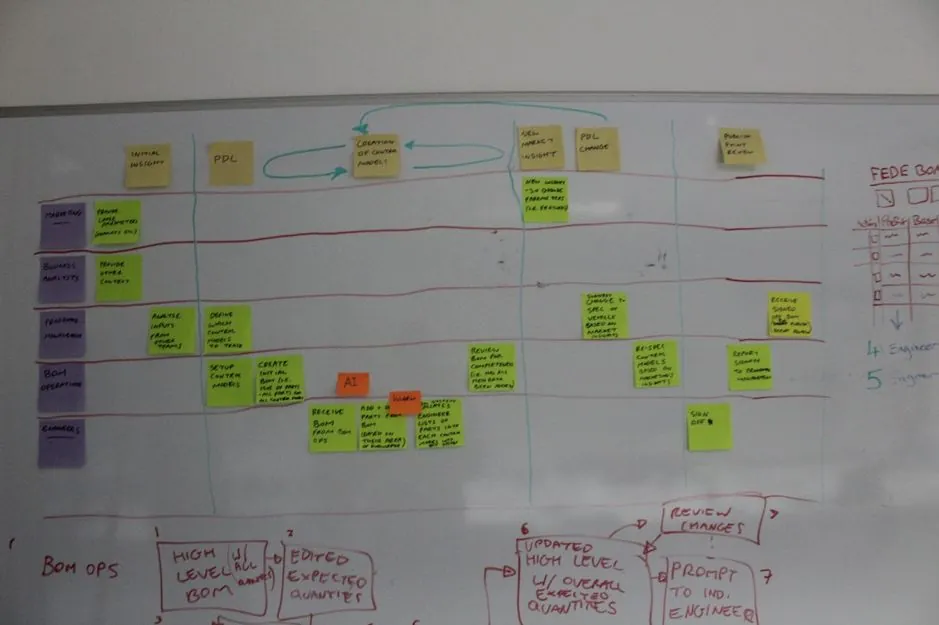
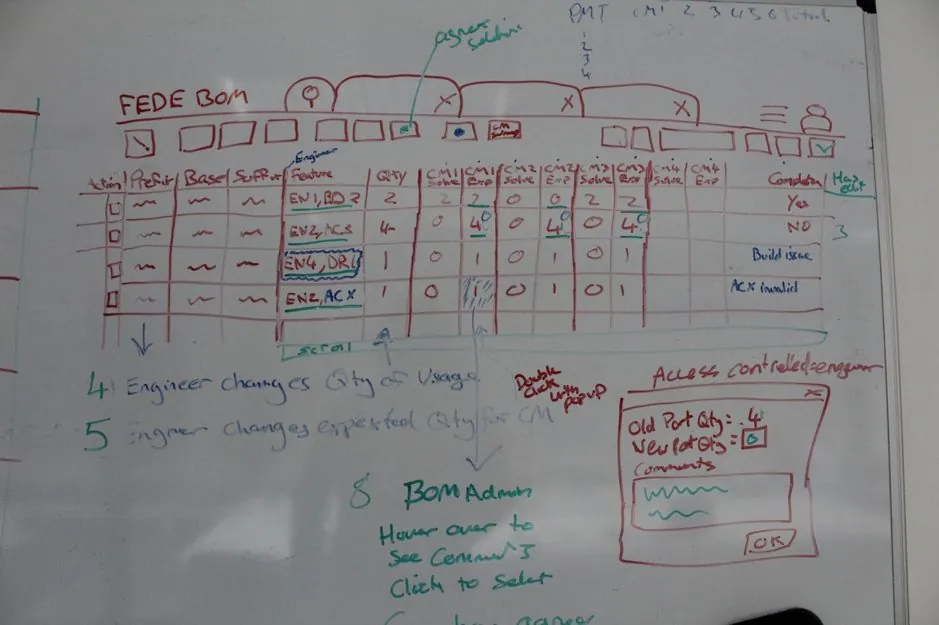
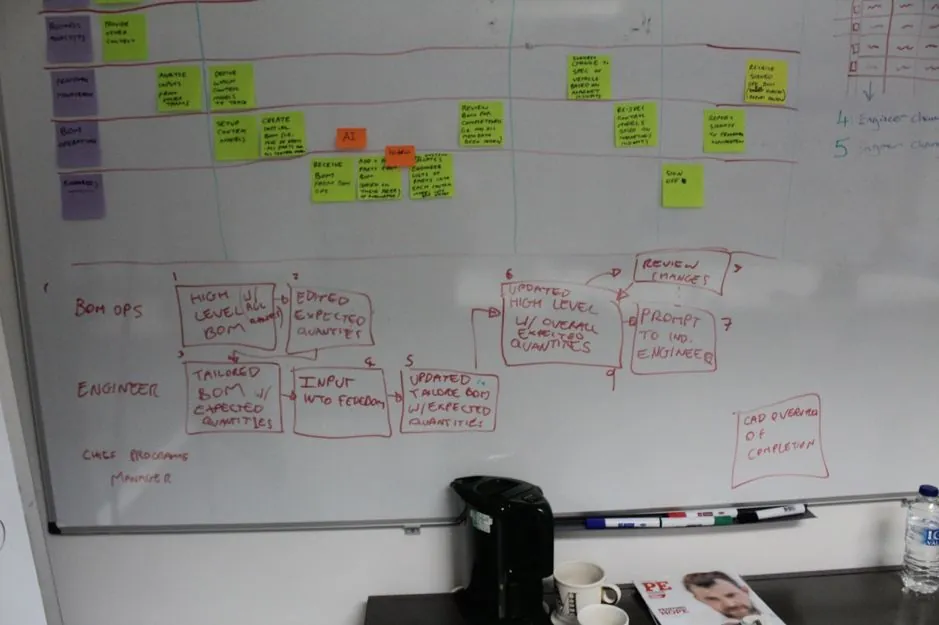
Two personas carried the design: the BOM operations manager, who delegates parts, and Eddy, a 30-year-old engineer of eight years at Ford who wanted fewer emails and phone calls, less time on the BOM and more on proper engineering. Working directly with Ford's data scientist, I ran exercises to find where the story really started and ended, then mapped the flow on a whiteboard. It had to fit inside the tool Ford already used rather than replace it. Paper mock-ups with Ford users came first, then Sketch wireframes, daily check-ins so no design decision broke the model, and an InVision prototype signed off by IBM and Ford.
Ten iterations to clarity
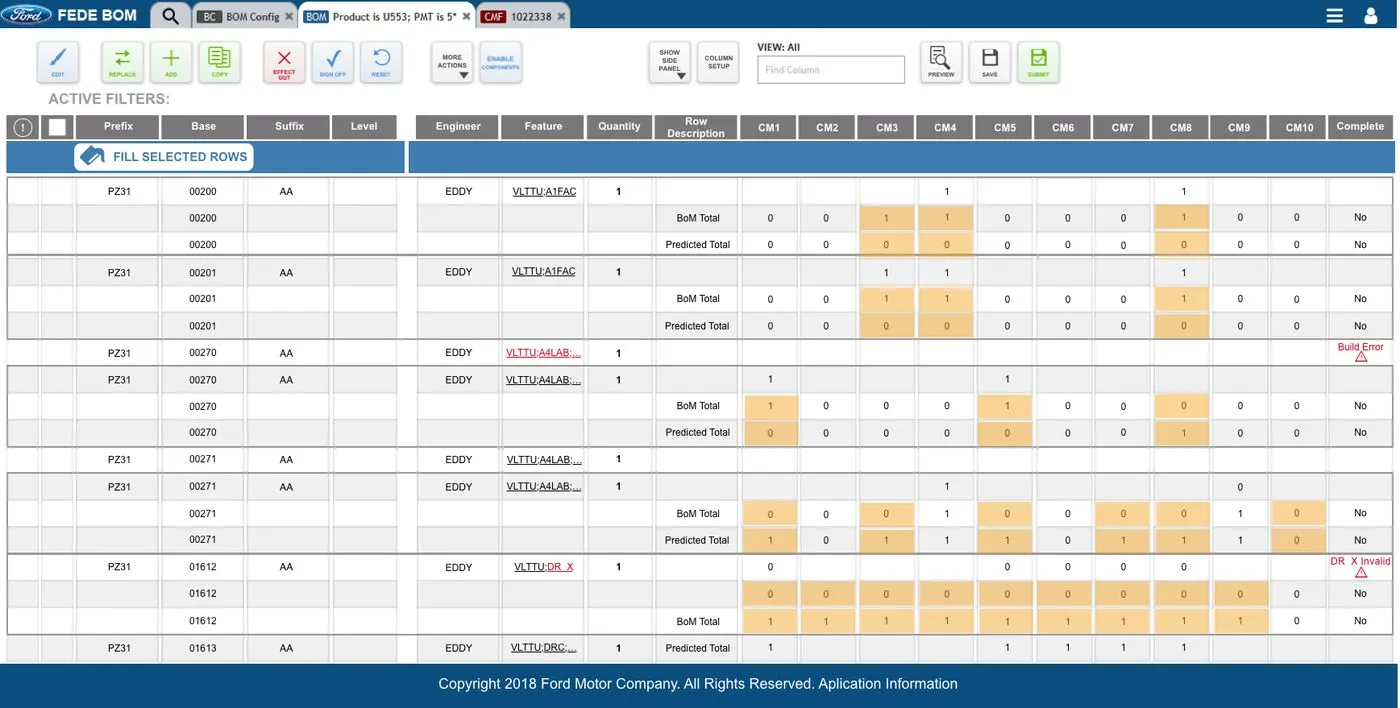
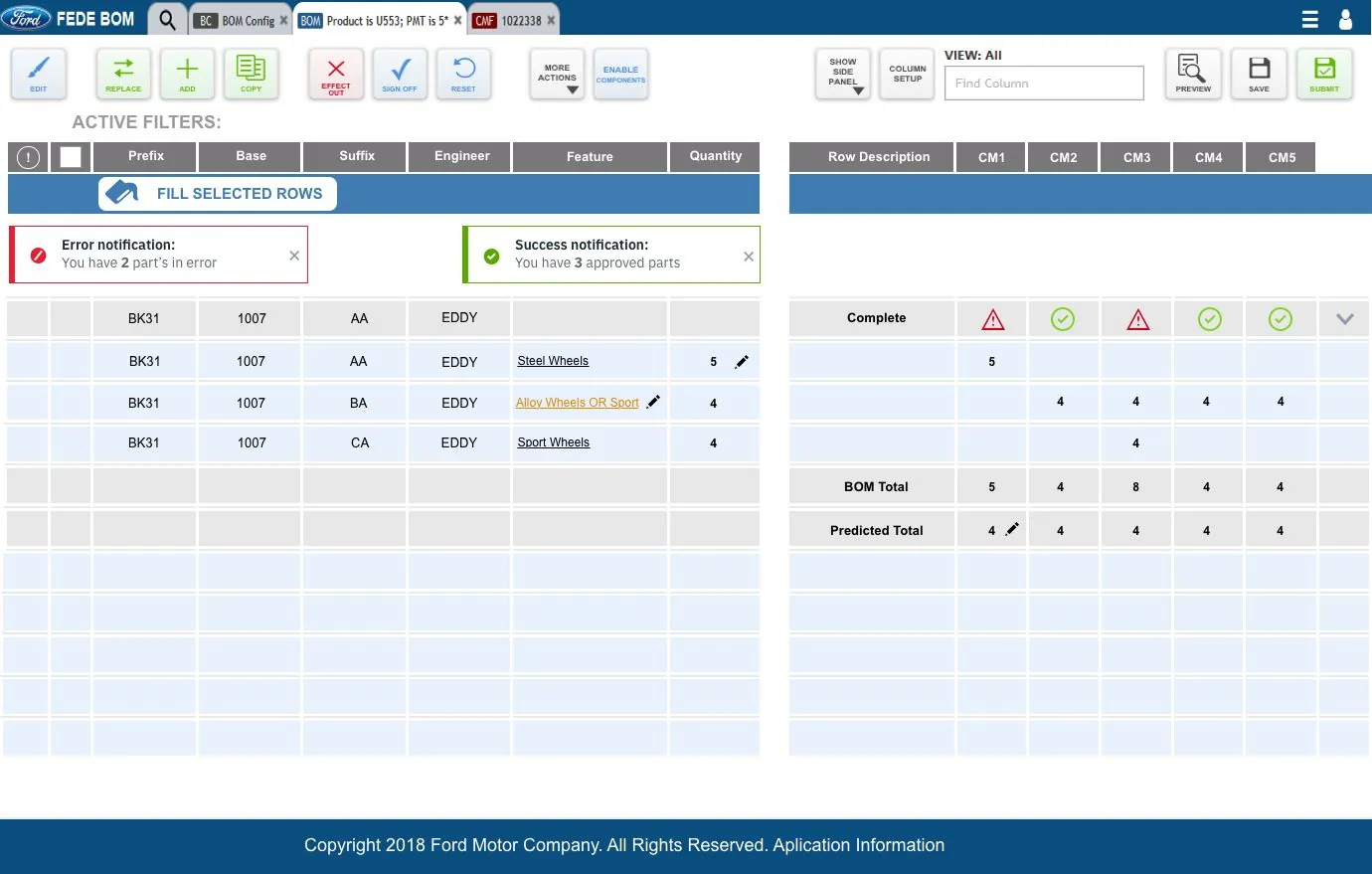
The back and forth between engineer and manager made this the hardest part. Early versions showed each part against the AI's predicted total for every control model, with discrepancies highlighted, and were too dense to act on. After roughly ten rounds with users, three changes made it work: showing at most five control models at once, notifications ranked by how urgently parts needed checking, and an inline drop-down so an engineer could judge at a glance and drill down only when needed.
Outcome
The screens went into a pitch to Ford partners, where I answered the design questions, and on to senior management with a four-step plan: find a team to fund a pilot, run it on the current technical model, review the results, then build a full BOM interface if it succeeded.